
Contact: podrska.iit@uni.kg.ac.rs
Mission of the Office for the Promotion of Science and Institutional Development
The mission of the Office for the Promotion of Science and Institutional Development is to systematically disseminate scientific knowledge, research results and innovations to the general public, as well as to continuously improve the visibility of the Institute of Information Technologies as a relevant and modern scientific and research institution. Through the development and application of modern models of scientific communication, the Office strives to make scientific content understandable, accessible and attractive to various target groups, including pupils, students, researchers, business and the wider social community. Special focus is placed on strengthening trust in science, promoting its importance for social development and connecting scientific achievements with everyday life and contemporary challenges.
Vision of the Office for the Promotion of Science and Institutional Development
The vision of the Office for the Promotion of Science and Institutional Development is for the Institute of Information Technologies to become widely recognized as a center of scientific excellence that successfully communicates its results and actively participates in shaping a knowledge-based society. The Office strives to build a sustainable and recognizable system of scientific communication that enables continuous visibility of research activities, strengthens the international reputation of the Institute, and establishes strong ties with the academic community, industry, and society at large. In the long term, the vision includes creating an inspiring environment in which science is not confined to academic frameworks, but is an open and accessible resource for all.
Goals of the Office for the Promotion of Science and Institutional Development
- Systematic increase in the visibility of the Institute's scientific results and activities through planned and continuous communication via digital and traditional channels.
- Strengthening public awareness of the importance of science and its impact on technological, social and economic development.
- Improving the Institute's visibility at the national and international levels through strategically guided promotional activities.
- Stimulating interest in science among young people through the organization of events, workshops, lectures and other educational activities.
- Supporting the development of future scientists through the promotion of research work, mentorship, and scientific careers.
- Development and application of modern scientific communication tools, including digital platforms and artificial intelligence, to increase the efficiency and quality of content.
- Strengthening cooperation with educational institutions, industry and the local community in order to connect science with practice and social needs.
- Promoting inclusiveness and accessibility of science to all social groups, while encouraging equal participation in scientific activities.
- Support for the promotion of research projects, innovations and interdisciplinary initiatives as a basis for the further development of the Institute and society.
Organization and method of work of the Office
The work of the Office for the Promotion of Science and Institutional Development is organized through three interconnected program units: a program unit for content and scientific communication, a program unit for design and a program unit for digital content distribution, with additional activities involving all members of the Office. The work is based on a clearly defined flow of information and materials between program units, ensuring efficiency, quality and a unique visual identity of the Institute.
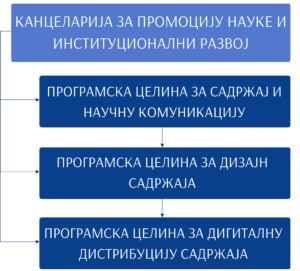
Figure 1. Organization and methods of work of the Office for the Promotion of Science and Institutional Development
The work of the Office is based on a clearly defined linear process in which the content and scientific communication program unit first prepares the textual content, after which the prepared material is forwarded to the design program unit, which performs its visual processing and combines the text and graphics into a single whole, while the finalized material is then delivered to the digital content distribution program unit, which is responsible for publishing on the website and distributing via the website, social networks and/or other forms of media. This work model ensures consistency of content, high quality visual presentation and efficient distribution of information.
Program unit for content and scientific communication
This program unit includes writing news and preparing content for the website and social networks. Activities include writing texts related to the Institute's scientific results, published works, implemented projects, scientific events, workshops, lectures and other activities of importance for the promotion of science and increasing the visibility of the Institute. The texts should be clear, informative and adapted to the general public, with the aim of presenting scientific results in an understandable and attractive way.
Design software package
This program unit is responsible for creating a visual identity and preparing graphic materials for all publications. Activities include the creation of unique graphic templates and maintaining a recognizable visual identity of the Institute on all platforms. Graphics are prepared for news, scientific papers, projects, events and other promotional activities. Graphic materials are created in accordance with defined standards and a professional design approach.
Software package for digital content distribution
This program unit includes technical preparation, publishing and distribution of content on the official website of the Institute, as well as on social networks (Instagram, Facebook, LinkedIn). Activities include publishing news, posting graphic material, planning the time of publication and monitoring basic statistics of visibility and interaction. In addition, this program unit is responsible for archiving and systematizing published news, as well as their forwarding to the University of Kragujevac for the purposes of creating official newsletters and other promotional publications.