
SCIENTIFIC RESEARCH DIRECTIONS
The scientific research work of the Institute of Information Technologies is based on the application of information technologies through three key strategic directions:
- Information technology-based development of therapeutic and biomedical solutions
- Information and technology-supported bioproduction and development of sustainable agrobiological systems
- Information technology supported sustainable environmental management and energy efficiency
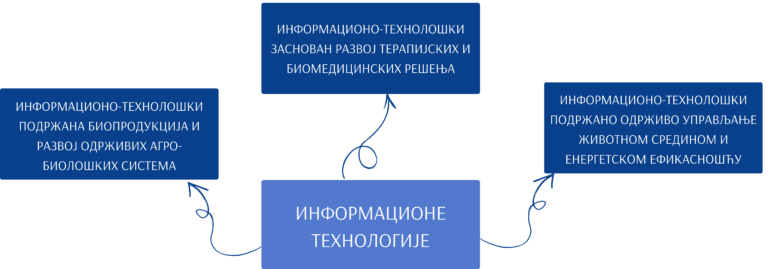
Figure 1. Key research directions of the Institute of Information Technologies Kragujevac.
The first strategic direction refers to application of information technologies in the rational design of therapeutic and biomedical solutions, where computer modeling, simulations, and artificial intelligence methods are used to understand molecular and biological processes. Digital models enable the identification of potential bioactive compounds, the prediction of their properties, and the optimization of research directions before conducting experimental studies. Based on the obtained digital results, experimental validation is carried out through laboratory tests, thereby reducing the number of unnecessary experiments, increasing the efficiency of research, and accelerating the development of new therapeutic approaches.
The second strategic direction is focused on information technology supported bioproduction and development of sustainable agrobiological systems. The application of information technologies enables predictive modeling of the chemical composition, biological activity and functional properties of natural bioactive resources, as well as optimization of production and biotechnological processes through the integration of large data sets and multiscale simulations. This approach contributes to the rational use of resources, the development of smart agriculture and sustainable food production systems, while experimental validation is carried out through chemical, biological and technological analyses.
The third strategic direction is focused on information technology supported sustainable environmental management and energy efficiency. Information technologies are used to simulate pollution, assess the impact of various technological processes on the environment, monitor environmental parameters and optimize energy systems. By integrating digital models and experimental data, tools are developed that enable decision-making based on scientific evidence, while model validation is realized through experimental research and monitoring in real conditions.
By connecting these three segments into a single operational research framework, the Institute of Information Technologies in Kragujevac positions information technologies as a central methodological and technological instrument of modern interdisciplinary science, based on predictive models verified by experimental data, with a clear focus on human health, food safety and environmental protection.